What Is an Adaptive Course? A Guide to AI-Powered Learning
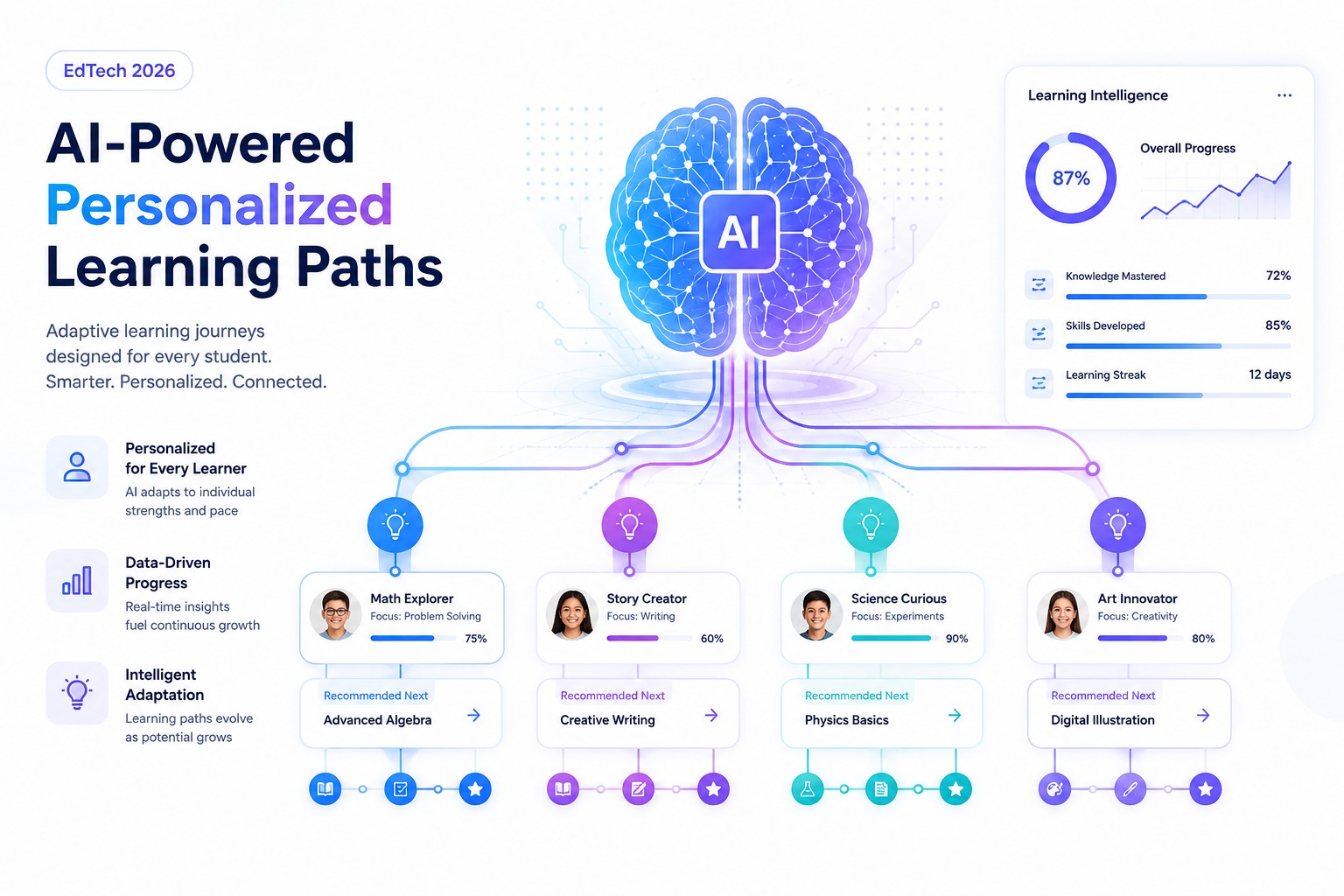
An adaptive course is a digital learning experience that continuously adjusts what a learner studies, practices, and reviews based on their knowledge, performance, progress, and learning needs. AI and real-time learner data can help determine the most appropriate content, difficulty, pace, and learning activities for each individual.
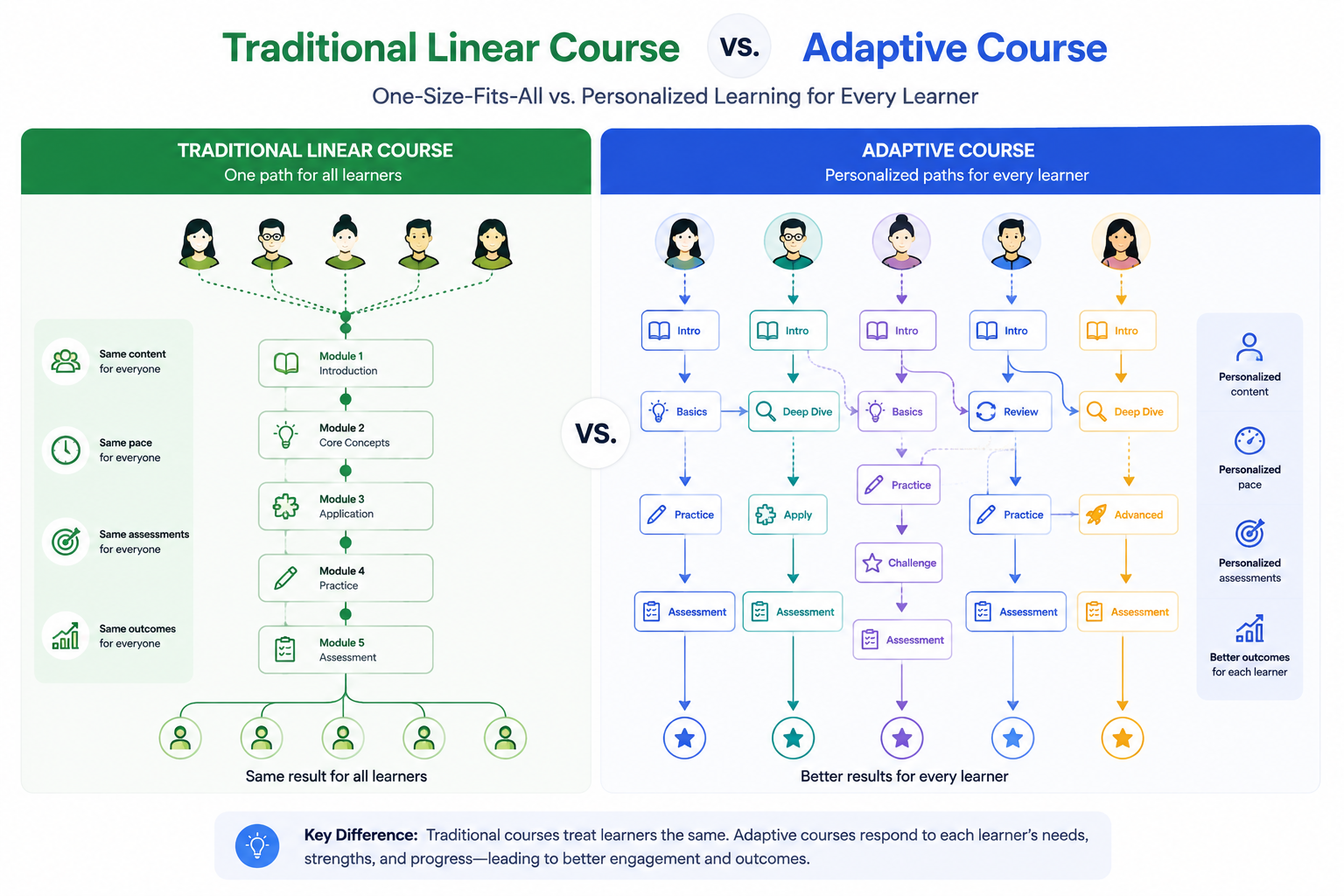
Unlike traditional courses where every learner follows the same sequence, adaptive courses can create different learning paths based on how each person learns.
Introduction: One Course, Multiple Learning Paths
Imagine a course that responds to you as you learn.
If you already understand a concept, the course can move forward instead of making you repeat material you have already mastered. If you are struggling, it can provide additional explanations, examples, and practice before introducing more difficult concepts.
That's the idea behind an adaptive course.
Instead of giving every learner exactly the same content in exactly the same order, an adaptive learning system continuously uses learner data to determine what should happen next.
This approach is becoming increasingly relevant in education and corporate training as organizations look for ways to personalize learning at scale.
In this guide, you'll learn what an adaptive course is, how adaptive learning works, how it differs from traditional e-learning, and how platforms such as Kidaiz use adaptive learning and TutorBoard to create more personalized learning experiences.
What Is an Adaptive Course?
Adaptive learning is a method of delivering educational content that adjusts the learning experience according to an individual's knowledge, performance, progress, and learning needs.
An adaptive learning platform can analyze information such as:
- Quiz and assessment results
- Correct and incorrect answers
- Response times
- Learning progress
- Areas where learners repeatedly make mistakes
- Completed activities
- Difficulty levels
- Learning objectives and skill mastery
The system can then use this information to determine which content, exercise, explanation, or assessment should come next.
In simple terms:
An adaptive course does not assume that every learner needs to learn the same thing in the same way.
Two learners can start the same course and follow different paths depending on what they already know and how they perform throughout the learning experience.
What Makes a Course Adaptive?
Three core capabilities typically make an adaptive learning experience possible.
| Component | What it does |
| 📊 Data Collection | Tracks learner performance, responses, progress, and other learning signals |
| 🧠 Analysis | Evaluates the learner's knowledge, skills, and areas that need improvement |
| 🔄 Content Adjustment | Dynamically selects or modifies the next learning activity |
The important element is the continuous feedback loop.
The system does not simply personalize the course once at the beginning. It can continue updating its understanding of the learner as new information becomes available.
For example:
A learner may initially appear to have a strong understanding of fractions. After several exercises, however, the system notices repeated mistakes when adding fractions with different denominators.
Instead of continuing with increasingly difficult material, an adaptive course can identify the knowledge gap and provide targeted practice before moving forward.
How Does an Adaptive Course Work?
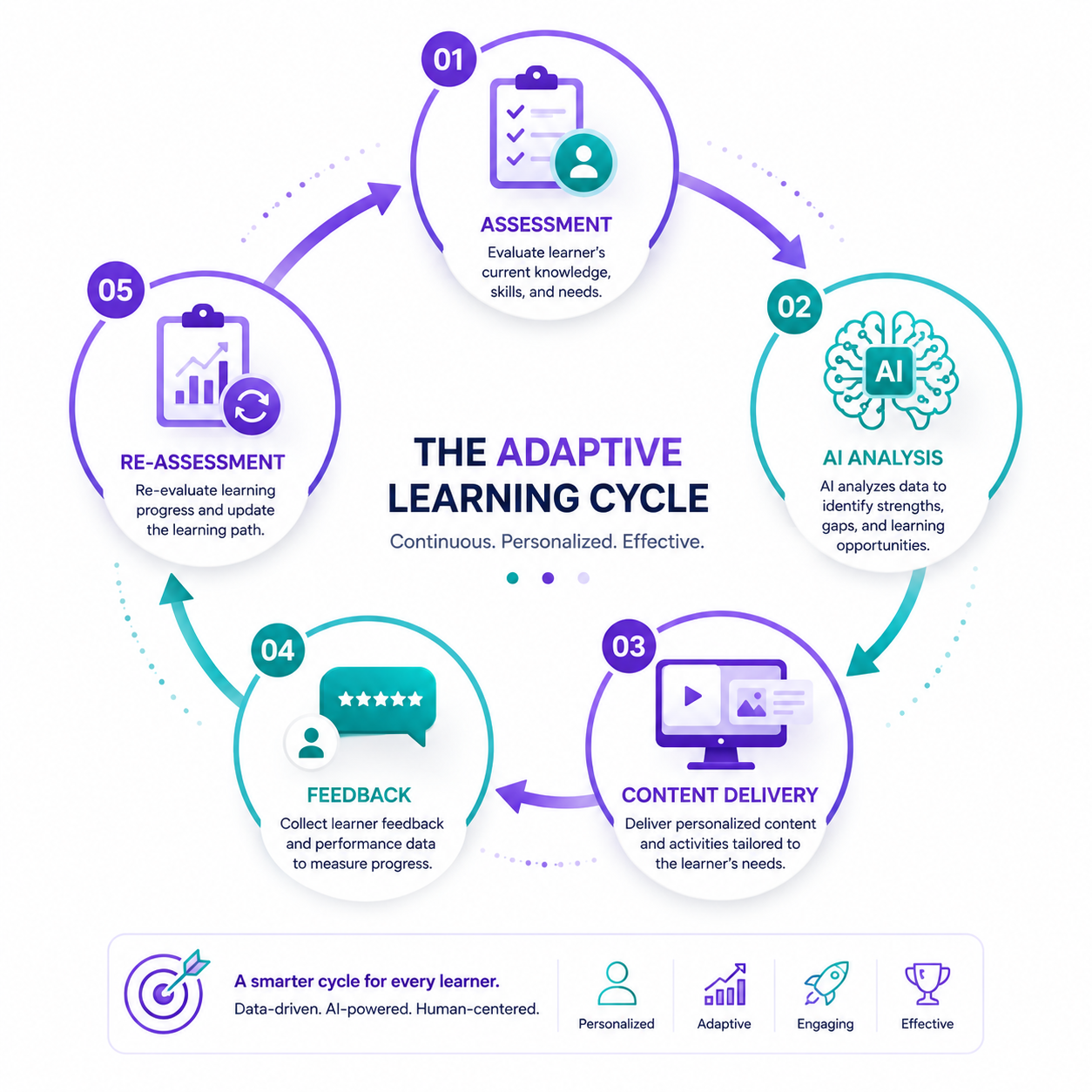
An adaptive course typically follows a continuous cycle of assessment, learning, analysis, and adaptation.
Step 1 — Baseline Assessment
The platform first needs to understand where the learner is starting from.
This can be done through:
- Diagnostic assessments
- Skill evaluations
- Existing learner data
- Previous course results
- Knowledge tests
- Initial activities
The goal is not necessarily to test everything. Instead, the system tries to establish an initial picture of the learner's knowledge and identify areas that may require attention.
Step 2 — Real-Time Data Processing
As the learner progresses, the platform collects new information.
For example, it can analyze:
- Which questions were answered correctly
- Which questions were answered incorrectly
- How long the learner took to respond
- Which concepts caused difficulty
- Which activities were completed
- How the learner progresses through the course
This information helps the platform continuously update its understanding of the learner.
Step 3 — Dynamic Learning Path Adjustment
Based on the available data, the system can adjust the learning path.
A learner who demonstrates mastery may receive more advanced material.
A learner who struggles with a particular concept may receive:
- Additional explanations
- Simpler examples
- More practice
- Remedial content
- Different ways of explaining the same concept
The result is that learners can progress through the same overall course while experiencing different learning paths.
Step 4 — Intelligent Feedback Loop
The process does not stop after the system recommends new content.
The learner interacts with the new material, generates new performance data, and that information can influence the next recommendation.
This creates a continuous cycle:
Learn → Practice → Measure → Analyze → Adapt → Learn again
The more the learner interacts with the system, the more information the platform has to personalize the experience.
Step 5 — Progress Monitoring with TutorBoard
For educators, tutors, and training managers, personalization should not happen inside a black box.
A learning platform can provide a centralized view of learner progress, helping educators understand:
- Which learners are progressing
- Which concepts are causing difficulties
- Where learners are falling behind
- Which skills have been mastered
- Which areas require additional support
At Kidaiz, this is part of the role of TutorBoard.
TutorBoard provides educators and tutors with a workspace to understand learner progress and interact with the learning experience while the adaptive course handles personalization.
What Is the Difference Between Adaptive Learning and Personalized Learning?
The terms personalized learning and adaptive learning are often used interchangeably, but they are not exactly the same.
Personalized learning is the broader concept. It means designing a learning experience around the needs, goals, abilities, or preferences of an individual learner.
Adaptive learning goes a step further by dynamically changing the learning experience based on new information about the learner.
For example:
Personalized learning: A learner receives a course designed around their current level.
Adaptive learning: The course continuously observes the learner's performance and changes what they learn next.
Adaptive learning can therefore be considered one way of implementing personalized learning dynamically.
Adaptive Learning vs. Traditional E-Learning
Traditional online courses often provide a predefined sequence.
Every learner may receive:
- Module 1
- Module 2
- Module 3
- Quiz
- Module 4
- Final assessment
This model can work well when learners have similar levels of prior knowledge and follow similar learning objectives.
However, learners often start with different levels of knowledge.
An adaptive course can instead modify the journey based on learner performance.
| Metric | Traditional E-Learning | Adaptive Learning |
| 🎯 Personalization | Mostly predefined | Dynamically personalized |
| 📚 Learning path | Fixed sequence | Can change based on learner data |
| ⏱ Pace | Usually predefined | Can adapt to learner progress |
| 🧩 Difficulty | Often fixed or manually adjusted | Can dynamically adjust |
| 📊 Analytics | Often focused on completion | Can provide granular performance insights |
| 💬 Feedback | Often standardized | Can be personalized |
| 👩🏫 Educator visibility | Depends on the platform | Can include detailed learner insights |
The objective is not necessarily to replace every traditional course.
Instead, adaptive learning can be particularly useful when learners have significantly different levels of prior knowledge, learning speeds, or areas of difficulty.
Key Benefits of an Adaptive Course
Benefits for Learners
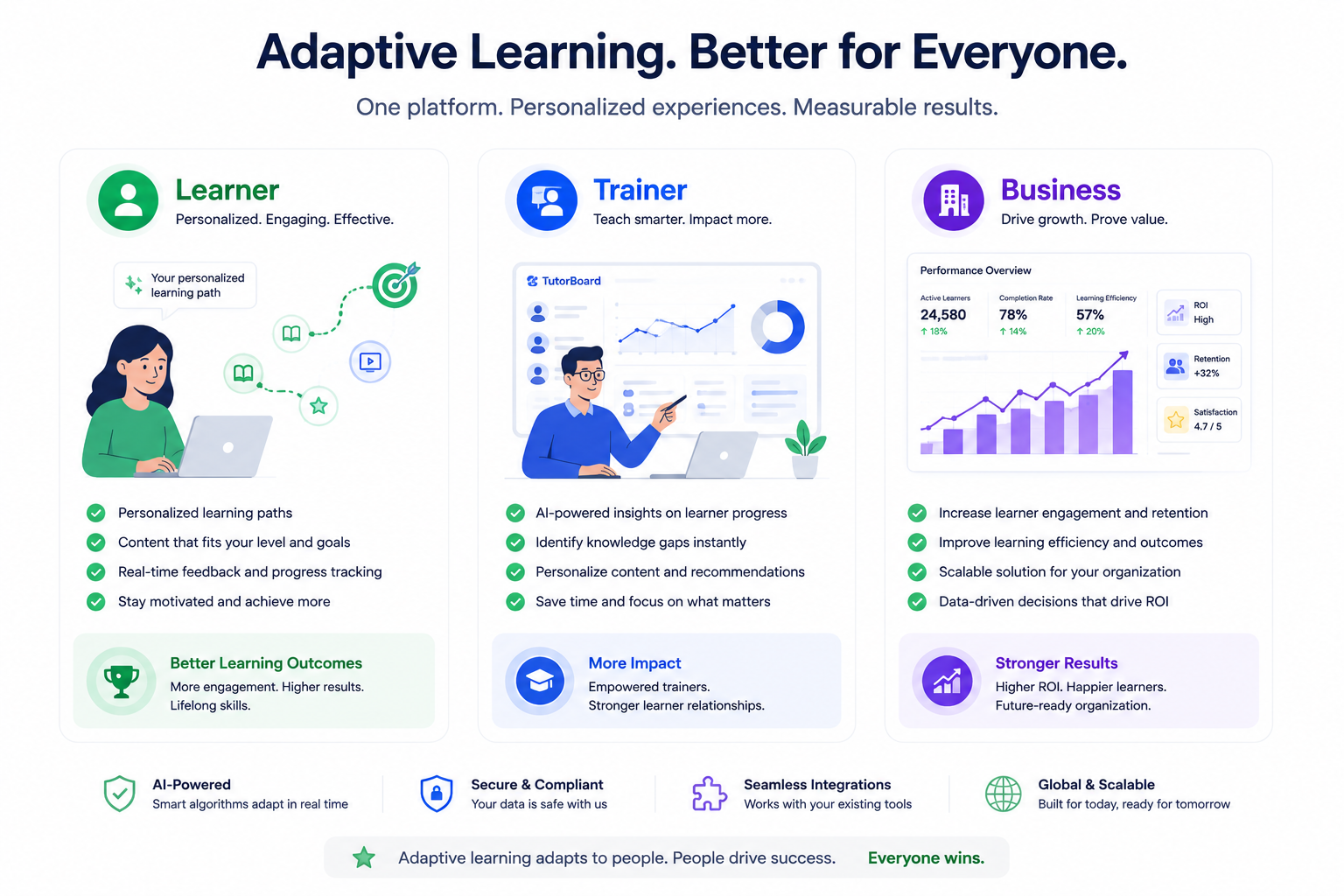
Adaptive learning can provide a more relevant learning experience by reducing unnecessary repetition and providing additional support where it is needed.
Potential benefits include:
- Personalized learning paths
- Targeted practice
- More relevant exercises
- Faster progression through mastered concepts
- Additional support for difficult concepts
- Continuous feedback
- Greater visibility into learning progress
Instead of asking every learner to spend the same amount of time on every topic, the system can allocate more learning time to areas where the learner needs it most.
Benefits for Trainers and Educators
Adaptive learning can also help educators manage learners with different levels of knowledge.
Instead of manually checking every learner's performance, a platform can provide information about:
- Learners who need additional support
- Common knowledge gaps
- Skill mastery
- Assessment results
- Learning progress
- Engagement patterns
This allows educators to spend more time teaching and supporting learners and less time manually analyzing large amounts of learning data.
Benefits for Organizations
For companies and training organizations, adaptive learning can help personalize training across larger groups of employees.
Potential use cases include:
- Employee onboarding
- Technical training
- Compliance training
- Professional development
- Upskilling
- Reskilling
- Certification preparation
When employees have different levels of experience, a single standardized training path may contain material that is too easy for some employees and too difficult for others.
An adaptive approach can help address this difference.
Who Can Benefit From Adaptive Learning?
Adaptive learning can be used across many different learning environments.
Educational Institutions
Schools, universities, and other educational institutions can use adaptive learning to provide more individualized learning experiences for students with different levels of prior knowledge.
Corporate Training
Companies can use adaptive courses to train employees across different departments, roles, and experience levels.
For example, a software engineer with five years of experience may not need the same introductory material as someone completely new to a technology.
Tutors and Training Organizations
Independent tutors and training organizations can use adaptive platforms to manage multiple learners while maintaining visibility into individual progress.
Professional Learning
Adaptive learning can also be useful for professionals learning new skills, preparing for certifications, or developing expertise in a new domain.
Adaptive Learning in Education and Corporate Training
The potential applications of adaptive learning extend beyond traditional academic courses.
In education, adaptive learning can support:
- Mathematics
- Languages
- Science
- Exam preparation
- Foundational skills
- Personalized remediation
In corporate environments, it can support:
- Employee onboarding
- Software training
- Compliance
- Leadership development
- Technical skills
- Professional certifications
The common principle is the same:
Different learners have different starting points, so the learning experience should be able to respond to those differences.
The Adaptive Learning Market
The adaptive learning market is attracting increasing attention as artificial intelligence becomes more integrated into education and corporate learning.
Several market research reports forecast strong growth in adaptive learning and AI-powered personalized education over the coming years.
For example, some market estimates project the global adaptive learning software market to grow from approximately US$2.06 billion in 2026 to more than US$10.8 billion by 2032, representing a projected CAGR of around 20%.
Other reports forecast substantially higher growth for the broader AI-powered personalized learning market.
Because market research firms use different definitions, methodologies, and market boundaries, these figures should be interpreted as estimates rather than precise measurements of the entire adaptive learning industry.
How Kidaiz Adaptive Course and TutorBoard Work Together
At Kidaiz, adaptive learning is built around two complementary components:
🎯 Adaptive Course
The Kidaiz Adaptive Course uses AI to create dynamic learning experiences.
Instead of assuming that every learner should follow exactly the same path, the system can use learner performance and progress to determine what should come next.
Depending on the learner's needs, the system can provide:
- New concepts
- Additional explanations
- Practice exercises
- Remedial activities
- More challenging content
- Assessments
- Personalized learning sequences
The goal is to continuously move the learner toward mastery.
📊 TutorBoard
TutorBoard provides the human side of the learning experience.
Tutors and educators can use it to:
- Monitor learner progress
- Understand areas of difficulty
- Review learner performance
- Identify knowledge gaps
- Interact with learners
- Support personalized instruction
This creates a continuous learning loop:
Assessment → Learning → Practice → Data → Adaptation → Tutor Insight → Better Learning
The adaptive engine personalizes the learner's path, while TutorBoard gives educators the visibility and tools they need to support that journey.
The Future of Adaptive Learning
The next generation of learning platforms is moving beyond simply delivering digital content.
Instead of asking:
"Which course should this learner take?"
future learning systems can increasingly ask:
"What does this learner need to learn next?"
That distinction is important.
A traditional digital course primarily delivers content.
A personalized platform organizes content around the learner.
An adaptive learning system continuously evaluates learner progress and changes the learning path accordingly.
With advances in artificial intelligence, learning platforms can potentially combine assessments, learner behavior, content generation, knowledge models, and educator feedback to create increasingly dynamic learning experiences.
The goal is not simply to automate teaching.
It is to make learning more responsive to the individual.
Frequently Asked Questions About Adaptive Courses
What is an adaptive course?
An adaptive course is a digital learning experience that dynamically adjusts content, difficulty, pace, exercises, or learning paths according to a learner's performance, knowledge, and progress.
How does adaptive learning work?
Adaptive learning typically follows a continuous cycle of assessment, learning, data collection, analysis, and adjustment. The system uses information about learner performance to determine what content or activity should come next.
What is the difference between adaptive learning and personalized learning?
Personalized learning is the broader concept of tailoring education to an individual's needs. Adaptive learning is a dynamic approach where the system continuously adjusts the learning experience based on new learner data.
Is adaptive learning powered by AI?
Adaptive learning does not necessarily require modern generative AI. However, AI and machine learning can significantly expand what adaptive learning systems can do, particularly when analyzing learner data, generating content, and selecting personalized learning activities.
Who can use an adaptive learning platform?
Adaptive learning can be used by students, schools, universities, tutors, training organizations, and companies that want to personalize learning for individuals or groups.
What is Kidaiz?
Kidaiz is an AI-powered learning platform designed to create personalized and adaptive learning experiences. Its Adaptive Course engine focuses on dynamically adapting learning paths, while TutorBoard provides tools for educators and tutors to understand and support learner progress.
Conclusion
Adaptive learning represents a shift from one course for everyone toward learning experiences that can respond to individual needs.
The core idea is simple:
Every learner starts from a different place, so every learner may need a different path to reach the same learning goal.
By combining learner data, intelligent analysis, dynamic content, and continuous feedback, adaptive courses can create learning experiences that are more responsive and individualized than static online courses.
Kidaiz brings this approach together through its Adaptive Course and TutorBoard, combining AI-driven personalization with tools that keep educators and tutors involved in the learning process.
The future of digital learning may not be about creating more courses.
It may be about creating courses that can adapt to the person taking them.